
If you’re reading this, it means you’ve been looking on the internet for answers. You may be in a relationship with a friend, romantic partner, parent, sibling, or even a co-worker, and you’re feeling unhappy or miserable, but you can’t pinpoint why. Your life might seem, on paper, to be pretty good. Perhaps you have a steady job, a comfortable home, children, friends, a partner that seems like a good person and is there for you. So why are you feeling drained? Depressed? Like you should be doing a better job, but don’t know how. Why is it that your friend, partner or family member says they love you, but you get the feeling they don’t really like you very much, and nothing is good enough for them, no matter how hard you try? You might notice some odd, quirky, seemingly unrelated behaviors that don’t really make sense. You think you must be doing something wrong, but you can’t figure it out. Let’s connect those dots.
Before we do though, let’s take a look at the realization process.
Your first guess, heck your tenth guess, may not be that this particular person in your life is a narcissist. In my case, I didn’t either. It wasn’t until I started researching that I figured it out. It’s easy to wonder, “How in the world did I not see this?” or “How could I have been fooled?” Know you’re not alone! Many people, highly intelligent people, have been in relationships with narcissists and didn’t even realize it, so please don’t feel like you’re not smart just because you didn’t recognize it. Narcissists are masters of deception and select their targets (you) carefully. They look for empathetic, caring, compassionate people who are generous and love to please others. Why? Because they like people to please them. If you’ve ever felt there’s an imbalance in giving between you and the person in question, you may have shrugged it off thinking, “I’m not doing this because I expect anything in return.” Or “I’m sure they appreciate it; they just don’t know how to express it.” We give them the benefit of the doubt, make excuses for them and justify their actions. This is because we are good people and cannot fathom expecting people to constantly go out of their way to do things for us. It would make us feel uncomfortable, and it should! In healthy relationships, there is a balance. Although it’s not always 50/50, it should be pretty close!
There are days when your friend, family member or partner just doesn’t have it in them to be the giver. And the same goes for you. But overall, there is a general give and take where each person feels valued. The relationship feels comfortable, relaxed, uplifting and balanced, like a partnership. If it doesn’t, it’s a red flag! It doesn’t mean this person is a narcissist, but it does mean they possess one of the nine characteristics of narcissism.
We’ll take a look at the nine characteristics in a moment, but first, here are a few behavioral traits of narcissists that could be red flags in addition to the one mentioned above.
Some Behavioral Traits of Narcissists
Have any of the following questions ever crossed your mind?
- Why does this person say one thing yet do another? Words & actions don’t match.
- Why does this person act one way in public and a completely different way at home?
- Why does this person seem so self-centered, yet act like a martyr?
- Why does this person say they love me, yet it seems that everything I do bothers them?
- Why does this person interrupt and talk over me?
- Why does this person not have empathy towards me, unless it’s when we’re with other people?
- Why is this person jealous?
- Is this person a hypochondriac?
- How come this person always has to be right?
- Why does this person always have to have their way?
- Why does this person get offended when I suggest a particular way of doing things?
- How much money DO we have?

- How come when I ask certain questions of this person, we seem to talk in circles and never reach a conclusion?
- Why do we keep having the same conversation / discussion/argument over and over and over again and never get anything resolved?
- How come when I share with this person that he or she has heard my feelings, I’m the one who ends up apologizing?
If you’re wondering how I could possibly be reading your mind right now, you might be dealing with a narcissist! Unlike physical illnesses that can manifest in numerous ways, narcissism manifests in a fairly consistent, straight-forward fashion.
Before we continue, it’s important to note that we ALL exhibit some of these narcissistic behaviors like the above “person” from time to time and to a certain degree. In general, though, please keep these two things in mind.
- Those with true Narcissistic Personality Disorder (NPD) must meet at least five of the nine characteristics as stated in the DSM-5; The Diagnostic and Statistical Manual of Mental Disorders compiled by top global mental health professionals, specializing in all types of mental disorders. These will be listed and explained below.
- Even if the person doesn’t check at least five boxes, if you don’t feel good after spending time with them, it doesn’t matter if they have NPD or not, it’s probably best to limit your time with them for your own sake!
So how do you know if someone is a narcissist? The truth is, a person who truly has NPD will most likely never be diagnosed because they don’t think anything is wrong with them, and therefore it’s rare for them to seek help from mental health professionals. That leaves it up to us to determine whether we feel they meet the criteria. And as stated previously, if you don’t feel good around them, don’t be around them! If you feel defeated or drained or taken advantage of after having spent time with them, give yourself permission to either limit your time with them, or cut them off completely. What you decide will depend on the nature of your relationship. It’s easy enough to fade out of a friend’s life. On the opposite end of the spectrum, it can be extremely tricky if the toxic person is a close family member, spouse, or the biggest client in your firm (true story). In any case, boundaries are imperative; either go no contact, or plan short visits on your own terms when you feel you can handle it.
I’ve found that for most people, including myself, the realization that their person in question is a narcissist is a process. We don’t jump to the conclusion immediately. One reason for that is because our brains are different. We don’t think the same way. As mentioned before, we can’t fathom someone acting these ways on purpose, so we make excuses for them and keep plugging away, trying our hardest to improve the relationship and soothe the other person, until at some point we hit a wall. We feel like the life has been sucked out of us and we stand there stunned, blinking, and wondering what the heck just happened, when the scary truth is it’s been happening the whole time.
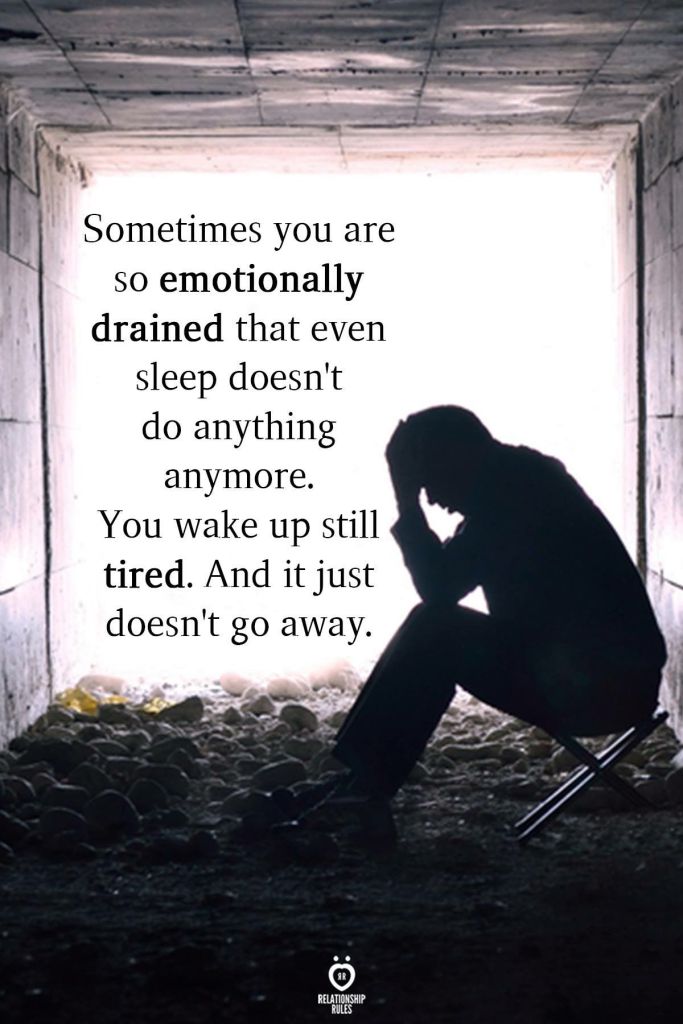
Then we look back and try to figure out what we did wrong and what we could have done differently. We might start to recognize or remember some odd, seemingly unrelated behaviors in our person in question. Then we start looking up behaviors and characteristics on the internet in a desperate attempt to figure things out. Each search comes up with the same results, “Narcissistic Personality Disorder.” Denial is the first reaction, but the information is so bizarrely on point, we keep reading and processing until we finally realize it’s true. That person is a narcissist – although we never really believe it 100% because we’re used to seeing the best in people, and it’s just too hard not to.
It’s absolutely essential to acknowledge this truth though, because until we do, we can’t heal. We’ve been giving this person the benefit of the doubt so long, sometimes 10 years or more, that more damage has been done than we can even imagine.
My personal epiphone began after separating from my now ex-husband. I felt confused, bewildered, and betrayed. Not only was I hurting emotionally, but I had also suffered from debilitating back pain, tumors- one large enough that the surgeon had practically cut me in half to remove it. I’d had infection after infection; bronchitis, pneumonia, ear infections, and was finally diagnosed with a serious immune deficiency disease requiring me to have weekly plasma infusions for the rest of my life. Not that these medical conditions had anything to do with my ex….or did they? I was exhausted physically and emotionally.
If you’re like me, your brain goes around and around like a hamster on a wheel trying to reconcile an issue that you just cannot make sense of. Why did my ex have so many odd behaviors and what did they mean? One day on a whim I typed these words into the search engine: “Self-centered yet plays the martyr.” Try it yourself and see what pops up! Or I’ll save you the time and trouble. “Covert Narcissist.” I was astounded. I knew my ex had some weird quirky ways about him, but he wasn’t a narcissist, was he? What was a narcissist anyway? I’d heard my friends refer to egotistical braggadocios people this way, but other than that I’d never had a reason to look into it further.
Types of Narcissists
It turns out there are more than one type of narcissist. Overt (usually recognizable due to being loud, animated and usually the center of attention), covert (also called fragile or vulnerable; attention seeking like the overt but does it by playing the victim and gaining sympathy), and malignant (which are actually in a whole different realm due to their sadistic nature). When I found this list (chart 1) and read it with my partner in mind, I was able to check seven out of the nine boxes. I was shocked! Suddenly I was filled with questions. Was he really a narcissist? If so, how did he become one, and when did it start? Had he always been like this and somehow, I didn’t notice? How could that possibly be? How could I not know? Was there any hope of him changing? Had other people seen this in him and not told me? My head was spinning.

Answers to all of these questions had to be out there, and I was going to find them. YouTube had many videos about narcissism, and I listened to them endlessly. I found some really good presenters on this subject. In addition, I read countless blogs, books and articles, joined narcissistic abuse recovery groups on social media, interviewed numerous victims. While the information and stories were very educational and enlightening, they were also terrifying. I remember watching a video in which the psychologist, towards the end of the video, looked straight into the camera and said, “If you’re in a relationship with a covert narcissist run away as fast as you can!” The blood in my veins went cold. Was it really that bad? Of course, deep down, I knew it was.
It took a lot of time and effort, but I found answers. They go beyond the scope and purpose of this little introductory blog in which my goal is to help people in the first stages of questioning and realization, and to open people’s eyes to the traits and characteristics of narcissistic people. I hope you get some value from this and feel clearer about the person in your life whom you have questions about.
In order to help clarify, I compiled a table, Chart 2, to include common behaviors of both overt and covert narcissists. I hope you find it to be helpful as well.
Narcissistic Traits and Characteristics
and how they’re manifested
| Overt Manifestations | Basic Traits/Symptoms based on the DSM-5 | Covert Manifestations |
| Must possess at least 5 of the 9 Symptoms | ||
| Loud. Demonstrative. If they can’t influence you with their charm they ridicule, criticize, and humiliate. | Grandiosity with expectations of superior treatment from other people | Passive aggressive, smug. Won’t act superior in public but will let you know in conversation how important they are. |
| Extremely competitive. View others as inferior. | Fixated fantasies of power, success, intelligence, attractiveness, etc. | Puts self in positions of authority or power. Subtly lets everyone know that they’re the best. Wants to be number one. Has to win. |
| Inflated sense of self. Flies into a rage when questioned. | Self-perception of being unique, superior, and associated with high-status people and institutions | Doesn’t advertise sense of superiority, rather tears others down to prove they’re better. |
| Boastful, arrogant, attention-seeking. If they can’t get positive attention, they stage a crisis or engage in risky behavior. | Needing continual admiration and/or attention from others | Creates drama. If they don’t get enough attention, they will create a crisis. Plays the victim. Hypochondriac. Pits family/friends against one another to remain center of attention. |
| Rarely apologizes. Does not take responsibility for actions. Blames. | Sense of entitlement to special treatment and obedience from others | Resists requests of others’ needs, but demands their needs be met. |
| Will do anything and everything to get what they want. Manipulative. Controlling. Bossy. Expects to be rewarded for good deeds. | Exploitive of others to achieve personal gain | Undermines those they believe are weaker; gossip. Drawn to natural caretakers; will exploit that tendency to feed their own need for attention. |
| One way. My way. Me. Me. Me. | Unwilling (unable) to empathize with the feelings, wishes and needs of others | Blames others for problems. Claims that life is unfair. “One-upping,” (you had it bad? I had it worse!) |
| Doesn’t like thinking anyone is better than them, so they might “steal” your story or take credit for your accomplishments. Projecting. | Intensely envious of others, and the belief that others are equally envious of them | Uses gas-lighting. Manipulates situations or puts others down to make themselves look better and others look inferior. |
| Acts entitled. Needs to be affirmed regularly. Puts others down to feel good about themselves. Fills up the room with posture. | Pompous and arrogant demeanor | Presents self with air of importance. Always has to be right. Words and actions don’t match. Acts one way in public and another at home. |
Examples of Narcissistic Behaviors
| Overt Behaviors | What it looks like (characteristics) | Covert Behaviors |
| I can _______, but you can’t. Insert: flirt, be happy, go out with friends, have friends of the opposite sex | Has double standards | Will explain after the fact why it’s ok for them to do certain things, yet not ok for you to do them. |
| Blatantly lies, gossips, demeans, Smear campaigns. | Always right | Passive aggressive. Pouts when challenged. Overtalks. If they don’t know, they’ll make up “facts.” |
| It may seem they’re fighting for a relationship or material things, but what they’re REALLY fighting for is to win. | Will win at all costs | Will formulate schemes to look like the best at everything. Will pout when loses, or will give reasons why he can no longer participate. |
| One way – my way. | See the world as black and white. | Doesn’t acknowledge anything out of his/her scope |
| Boldly and aggressively tells you you’re wrong. They flip out if you tell them NO. | Intolerant of others’ opinions or beliefs | Ignores and/or attempts to convince you that you’re wrong |
| They tell you to stop being such a wuss, but they are the worst patients. Can mimic empathy (especially in public) but go back to their ways after | No empathy; cannot put self in other peoples’ shoes | Ignores the fact that you’re sick or hurt. Makes no effort to comfort. However, if they’re sick or hurt they want max attention. |
| Whatever is mine is mine. Whatever is yours is also mine. | No boundaries | Whatever is mine is mine. Whatever is yours is also mine. |
| They crave control so much that they never leave as long as you engage with them. They don’t want you; they want control. | Do whatever they need to do to get what they want | They’ll switch from tactic to tactic in an attempt to get what they want, crying, aggression, pleading. |
| If charm doesn’t work, they resort to criticism and humiliation. | Manipulates | They very convincingly spew out information as if it is fact. You never know what’s real. Gaslighting. |
| If it’s important to me, it matters. If it’s important to you, it only matters if it’s also important to me | Unwilling/unable to see things from another’s’ point of view | If it’s important to me, it matters If it’s important to you, it matters only as long as it’s also important to me. |
| Take advantage of people’s kindness or weakness to obtain what they want. | Exploit others who they consider to be weaker to make themselves feel superior | Gossip, spread rumors, word salad Create a crisis so they can “save” you and be the hero, while you look weak or foolish. |
*Information in this table acquired from Psychology Today article “Dealing With the Narcissist’s Smear Campaign”
You may have noticed some terms you don’t recognize in the charts above, such as “gas-lighting” and “love bombing.” Please look at the additional articles below for a full explanation.
In Closing
In closing, you might be feeling overwhelmed and have more questions now than you did before. I understand and have been there. One pill that’s very hard to swallow, because we are capable of compassion, is that true narcissists don’t have the capacity to empathize or love the way you and I do. They mimic it. They’ve seen how healthy people act when they’re concerned about someone else, and they copy those behaviors in order to stay in good standing. They don’t want to jeopardize their persona.
Narcissists, at the root of it all, are extremely insecure, and all of the things they do stem from this. Knowing that, you might have the inclination to feel bad for the narcissist. That would be like feeling bad for Darth Vader or Voldemort. Yes, what happened to them in their early years was tragic and very sad. However, this doesn’t change the fact that once they reached adulthood and could choose between good and evil, they chose darkness. That’s an extreme example, but effective, I think. In future publications I’ll explain in further detail how people become narcissists, but for now just know that among other things it’s essentially caused by either overly protective parenting or by neglect. Genetics may also play a part. The bottom line is that these people cause trauma and pain to anyone who engages in a relationship with them. We have to be in charge of our own well-being, and that means we have to have limited or no contact with them.
Please look for further publications coming soon:
- How and why does someone become a narcissist?
- At what age does someone become a narcissist?
- Is there any hope that a narcissist will change?
- What are the short-term and long-term effects of narcissistic abuse?
- How to heal from narcissistic abuse
- Dating after narcissistic abuse
Feedback:
I’d love to hear your thoughts on this article! Do you think you have a narcissist in your life? Feel free to share your experiences. Just click the “Feedback” button below left, or leave a comment!
Read More:
Please check out my other articles. I’m adding more every day, so check in often! I hope you find value in them. 🙂
- Flying Monkeys, Smear Campaigns, and the Narcissistic Dance
- Gaslighting. What is it Anyway?
- Happy….errr….Crappy Holidays!
- Love Bombing
- My Story and My Mission
- Narcissistic Partners. Why Do We Stay?
- Narcissists Make You Sick. Literally!
- The Grip of the Narcissist: Do We Want to Be Freed?
- Welcome to Crazy Town! The Narcissistic Abuse Cycle Explained
2 responses to “Is There a Narcissist in My Life?”
-
I appreciate your vulnerability in this post. It is so easy to become swept up in a narcissist’s lies and start believing it about yourself. I have encountered this as well and we need more education and information on what signs to recognize to prevent this from happening in other’s lives.
LikeLike
-
Thank you for your comment, it’s much appreciated! It’s scary to share our stories, but when we put them out there, two things happen. First, like mold, when our stories are hidden in the dark, they continue to expand, grow and thrive, making us sick. Once they’re exposed to light, like mold, they dry up and become like harmless dust.
Second, our stories can help other people that are going through something similar, and in this case it’s so important because of the nature of the situation. So many people feel they can’t share their stories of narcissistic abuse because the narc might react, because they feel people won’t believe them, and because it’s embarrassing. In keeping silent, we end up isolating ourselves.
-


 The Narc Narc
Leave a comment