A Real Life Story About How Attachment Styles Are Formed. From My Perspective
This is hard!
I have to say…this is kind of a hard blog to write. I started it about a month ago and keep putting off finishing it. My mind is having a tug of war.
Me: “You’re betraying your mom!”
Also me: “But it’s the truth!”
Me: “People might think less of you for saying these things.”
Also me: “But it might help someone. And it’s the truth.
Me: What if she was alive to read this? It would hurt her feelings.
Also me: But she isn’t. And yeah…it might. But she isn’t.
One of my friends once responded to my story by saying, “It sounds like you hate your mom!” She has an emotionally healthy mother and has no way to relate, not that I’d want her to be able to. The fact is, while I hate how my mother treated me, I’ve NEVER hated my mom. I loved my mom. And no matter how many times she hurt me, I always held out hope, somewhere in the recesses of my heart and brain, that she loved me too, and that one day things would change.
She passed away seven months ago when she went in for heart surgery and didn’t come out. It’s weird because she knew. She said all of her goodbyes a week prior, while she was waiting in the hospital to be “strong” enough for the procedure. I always wondered how I’d feel. My guess was I wouldn’t have much of an emotional reaction. I was right. I cried because I wasn’t there with my sister when the surgeon came out and told her the news 10 minutes after he brought her back, and I felt bad that my sister had to experience that alone. Other than that, oddly, it didn’t feel much different than when she was alive, except that the stress of her inclement criticisms and constant service requests were no longer there.
Just the other day though, in the top drawer of my dresser, I found a bracelet that my mom had made during Arts & Crafts while living at her Assisted Living Facility. It was made of beads with letters on them. She’d spelled my name, and she was so proud of it and happy when she gave it to me. It was all twisted, some of the letters upside down, proof of her dwindling mental and physical abilities. I could picture her frail hands working hard to complete her art project.
I burst into tears. I’m crying now as I’m remembering finding it. With all my heart, I wish she’d had the capacity to be a loving mother, and that we’d had a healthy relationship like I have with my children. I mourn the loss of the mother I never had, and the hope that I’ll ever have one. Her tormented life is over and she’s now at peace. This gives me comfort.

I finally decided I’d finish this blog, and leave it to God or the Universe to lead anyone who needs to read it there.
Facts Tell & Stories Sell
In the sales world, there’s a saying. “Facts Tell & Stories Sell.” People make decisions based on emotion, not numbers or statistics.
Although information is great, and knowledge is power, data leaves us with little understanding of how a situation presents itself in the real world. Testimonies fill in the gaps. They provide answers to the questions that ‘facts only,” leave us with. At the same time, I personally think stories are more believable when they have facts and science to support them. Think of facts as bricks, and stories as mortar. Together they form a strong, solid, complete structure.
Primary Caregivers and Their Consistent or Inconsistent Behavior
In my last blog about Attachment Styles, I shared a lot of facts. If you haven’t read it, you can read it here: https://wp.me/peddxV-9A It’s very interesting and informative, and explains why adults act and react the way they do. My intention behind writing this current blog is to share a part of my own personal story in order to SHOW, rather than TELL, how Attachment Styles can develop as a result of how we were raised,(and consequently direct the course of our entire lives). I’m hoping that my own personal testimony will fill in the gaps.
Important Background Info
Keep in mind that when we’re talking about attachment styles, we look mainly at the primary caregivers (many of whom have experienced their own trauma in the past, and are either narcissistic or have BPD; Borderline Personality Disorder.
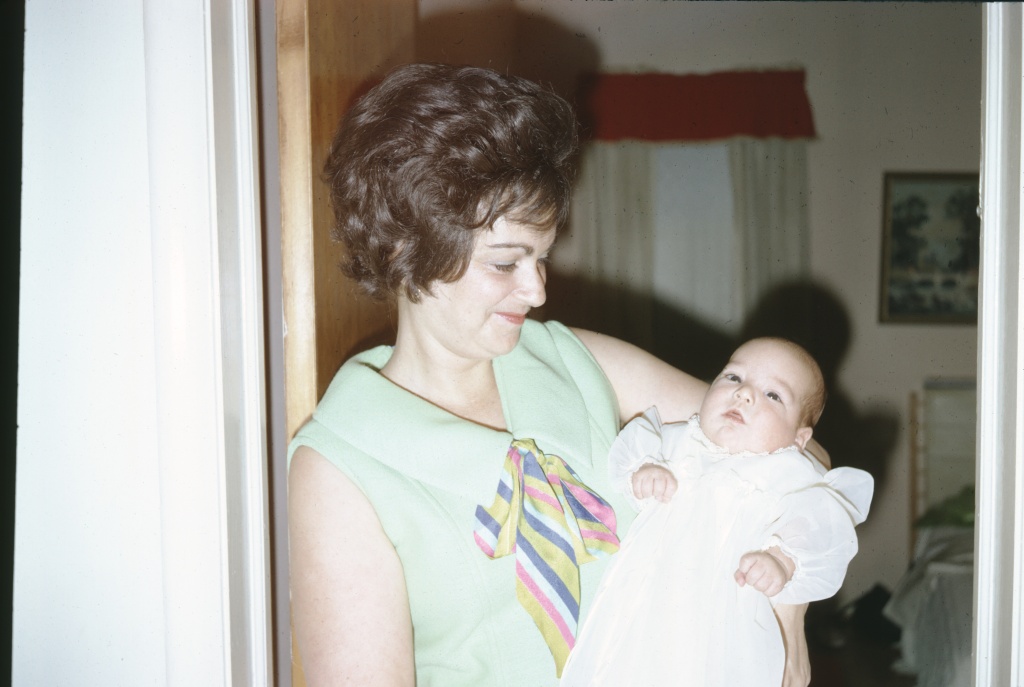
Also keep in mind that the caregiver’s words and actions that create these attachment styles in us, aren’t few and far between. They are chronic and consistent, resulting in us, the recipients of their behavior, having CPTSD (Complex Post Traumatic Stress Disorder), which basically is “Relationship Trauma.” When this trauma happens repeatedly over the course of months or years, CPTSD can result. If you’ve experienced this first hand, you’ll be able to relate to my story even if your specific situations may have been different.
Symptoms of CPTSD
When my therapist told me I was suffering from PTSD I didn’t believe him. I thought that only applied to military people. If you’re like me in this, you might be surprised to find you have some or all of the symptoms listed here!
I’m not going to get too deep into CPTSD, because that’s not the focus of this article. But it is important to have a basic understanding of how it manifests. When someone is suffering from CPTSD these signs and symptoms occur:
- Difficulty controlling emotions
- Feeling angry or distrustful of the world
- Feelings of emptiness or hopelessness
- Feeling permanently damaged or worthless
- Feeling you are different than everyone else
- Being on high alert all the time – waiting for the shoe to drop
- Anxiety and or depression
- Physical symptoms: increased heart rate, muscle tension, fatigue, nausea, sweating, shaking, headache, back pain or other pain seemingly unrelated to trauma
. Brief Synopsis of Attachment Styles
In case you don’t want to go back and read the whole blog about attachment styles, here it is in a nutshell. Attachment styles refer to our early relationships with our primary caregivers and how we bonded with them. This directs our decisions in life and has an effect on our relationships well into adulthood. There are four basic attachment styles. Secure, and three types of Insecure.

Secure Attachment Style. Caregivers are emotionally healthy and well adjusted. They consistently support their children physically and emotionally. As adults, people with secure attachment styles have healthy relationships with friends, coworkers, and romantic partners. They have a sense of purpose and can communicate needs.
The Three Insecure Attachment Styles:
- Anxious/Preoccupied: Children cannot depend on their caregiver for consistent emotional support because the adult is sometimes responsive and sometimes not. Therefore, as adults they often have poor self-esteem, are hesitant in expressing their needs, crave constant reassurance, and fear abandonment, and are emotionally dependent on their partners. Feelings of doubt, depression, anxiety, stress are common.
- Avoidant/Dismissive: Children do not seek out the caregiver for emotional support from caregivers because they are shown or told that emotions are “bad.” Emotional displays are punished or ignored (abuse/neglect). Adults with this attachment style seem fine on the outside and tend to like themselves well enough, are rarely lonely, but only let people get so close before they put up a wall or find a reason to leave before they’re left. Their relationships are shallow because they don’t know how to achieve intimacy.
- Disorganized/Fearful Avoidant: Children can’t trust the caregiver because they show highly contrasting behavior,which is very inconsistent, and unpredictable. The child never knows what’s coming next, a hug or a slap across the face. Therefore the primary caregiver, who is supposed to be the source of comfort and safety, is also a source of fear and pain. Adults with this attachment style have a difficult time with relationships. They desire connections, but are petrified of them. They tend to be clingy, have a lot of anxiety and depression, and fear being abandoned. They expect and wait for rejection because they’ve learned that it’s only a matter of time before hurt comes from the ones they love most.

Enmeshment, Trauma Bonding and Cognitive Dissonance, Oh My!
This can and will be a blog post of its own, but for now we’ll stick to the nitty-gritty . It’s very important to have a basic understanding of these terms so that you’re able to better interpret certain behaviors and their results.
If you’ve never listened to a YouTube video by Dr. Kim Sage, I HIGHLY recommend it. She’s a licensed clinical psychologist and speaks from personal experience. She’s opened my eyes and helped clarify so many things for me.
Enmeshment: Dr. Sage describes it as a boundaryless dynamic in which the child exists to serve the emotional, physical, mental, and other needs of the caretaker. The adult seems to feel they cannot live without the child. It’s not a healthy hierarchy of parent/child with clear guidelines. The child is essentially a tool.
Trauma Bonding has two parts:
1. An imbalance of power, which is the nature of a parent/child relationship. The parent should be a source of safety and comfort, however the child gets sucked into the adult’s life and becomes the parent’s “best friend.” The grownup dumps their personal challenges, trauma, and relationship problems on the child, and the child is expected to emotionally help the parent get back on track.
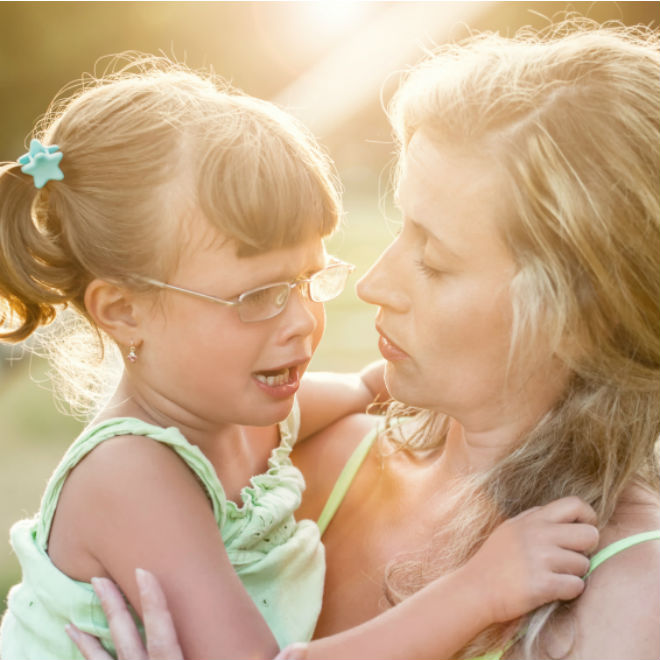
2. A cycle of abuse and intermittent reinforcement. Dr. Sage equates it to playing the slots. You’re going to lose and lose and lose, but eventually you’re going to win, although you never know when, and so you stay in the game.Children, on the other hand, stay in the “game” (trauma bond) because they have no other choice. Their parents are their only source of survival. This is where a disorganized attachment pattern comes in because the parent is simultaneously a source of safety and of fear. When put in a position of having to choose, children almost always choose attachment over fear. That’s why, even if they’re taken from an abusive home, they want to go back.
Cognitive dissonance: When reality is too much to bear, we assign false personalities to the people who hurt us, and/or we justify their actions, make excuses for them, and create stories in our heads to make us feel better. I’m pretty sure that’s what was happening.
***As you’re reading, see if you can identify some patterns and behaviors from the explanation of Attachment Styles, Enmeshment, Trauma Bonding and Cognitive Dissonance above.
My Story * My Perspective
Disclaimer: (I’m the queen of disclaimers and justifications. I do it when I’m afraid people are going to think I’m overly dramatic, which is a symptom of insecure attachment. So please humor me. I’m still a work in progress). We did have some fun times together as a family growing up, I’m just not including them here as I’m focusing on situations regarding attachment styles. However, if you’re interested in knowing the whole story, including the best part – healing and beyond, I’ll be publishing my memoir later this year. Thank you.
Anxiety and Panic Attacks
When I was 6 years old I started having full blown panic attacks. My earliest memory of one is when my mom was walking me to CCD (the Catholic equivalent of Sunday school), a few blocks away. As we approached the building and I could see it, the windows, moving people inside, my heart started pounding out of my chest. My breathing got quick and shallow. A feeling of absolute terror came over me, as if someone had a gun to my head. I stopped walking and planted my heels in the ground and started saying, “I don’t want to go. I don’t want to go.” As my mother dragged me, my mumbling turned to wailing, “I DON’T WANT TO GO!!!”. While she pulled, I twisted and screamed like a wild animal about to be put in a cage. I could see kids peeking out of the windows of the building but I didn’t care. That’s all I remember.
At night I would have dreams of opening my eyes and being in a white misty place all by myself, no one else as far as my eyes could see. For some reason equated it with death or heaven. I would start yelling for my mom but no sound would come out. Terrified, I tried over and over again. Eventually I got my voice to work and I ended up yelling at the top of my lungs. By the time my mom came in to ask me what was wrong I was dripping with sweat, hyperventilating, eyes wide. “I’m afraid of dying,” I’d say, barely able to form the words.

Throughout my entire life, I’ve dealt with anxiety. Every minute of every day. And I’ve suffered panic attacks when something triggers me. Usually they center around my perception of being left behind, isolated, forgotten, separated, abandoned, or suffocated, like being buried alive. Rational or not, it doesn’t change how it feels.
As a young child I’d think about the day I’d have to leave my mom. I’d ruminate about graduating from high school and having to go to college. My stomach would feel sick as I sensed a panic attack coming on. The thought of leaving my mother was paralyzing. “Nobody can make me do anything I don’t want to do,” I’d say out loud in order to console myself. “I don’t have to leave my house if I don’t want to.” This was the only way I could calm myself.
Conditional Love
Unpredictable Mom. If we did things that pleased her, she was nice. If we did things that upset her, she was critical and mean. Her face said it all. There wasn’t much middle ground. No saying, “I love you,” which at one time I chalked up to being a generational thing. Even so, actions speak louder than words, and to be honest, most of the time I most definitely did not feel loved.

However, I rationalized this way. She was my mom. Moms love their children. So she loved me. She just didn’ know how to show it. She provided us with clothes and meals, and made sure we took baths and went to school.
Later, when I saw how my friends’ moms treated them, I thought it was rather odd that they would want to spend time together, or come in before they went to sleep to say prayers with them. It was weird and uncomfortable. I clearly remember thinking, “Why does so & so’s mom want to take her to lunch? That’s so strange! Who does that?!”
Once I got older and moved out of the house, I never heard from her. Ever. Unless she needed something. Neither did I hear from my dad. My dad worked, and tried his best to please my mom.
Eventually I realized there was a good chance my mom had some mental illness going on. I also became aware that my family was dysfunctional. Still, I minimized my experiences because who wants to believe they’re a victim of abuse and neglect? I rationalized that because my mom didn’t lock me in a closet and refuse to feed me, that it wasn’t abuse. Pull quote

Where’s Mom? A lot of times she seemed like she was in her own little world. She didn’t pay much attention to my younger sister and brothers, so I felt like I needed to step in and help take care of them. My sister didn’t talk much so I would interpret for her and make sure she got what she needed; food at the dinner table for example. I changed my baby brother’s diapers and fed him. When my other brother didn’t obey my mom, I disciplined him and made him do what she said.
Saturdays were “Clean the House” days.” She would tell me I could clean the bathroom better than anyone else, and that’s why it was my job.. It made me feel proud and special. Yet after I’d spent hours meticulously cleaning in order to live up to her expectations, she’d inspect my work and point out every little thing that I missed, and tell me I did a “half ass job.” Within seconds I’d go from feeling valued and important to worthless and inadequate.
Critical Mom. She was extremely critical. She talked negatively about people at church, people on TV, people in the grocery store, just about everyone, including my dad, who was the most meek, mild person around. Certain people, though, she’d put up on a pedestal, like her boss at work.

Her moods shifted very quickly, so we were constantly walking on eggshells. Most of the time she had no idea where we were or what we were doing. Unfortunately that resulted in my siblings and me being in places we shouldn’t have been, and things happening to us that shouldn’t have happened. Sexual abuse. Addictions. Jail. All four of us have stories.
Mad Mom. When mom got mad she got REALLY mad and would chase us around the yard with whatever she could get her hands on, ready to hit us with it. We could usually out-run her though. Once she got mad at my sister and me because we wouldn’t go to sleep. She came in with a wooden spoon and started wailing on me. She hit me so hard it left a welt on my backside that lasted a week.

Demanding Mom. One of the things I hated most was when she’d write notes for me to take down to the convenience store “allowing me” to purchase cigarettes for her. My little sister, my little brother and I, approximately ages 8, 6, and 4, would walk about half a mile down to the convenience store where I would present the piece of torn paper with her writing on it. I absolutely hated doing it because for one, I knew I wasn’t old enough to be buying them, and I didn’t like being put in that position. It was embarrassing to me. And two, I’d seen what cigarettes had done to my mom’s mom. She died of emphysema. She’d cough and cough until she could no longer exhale and then struggle to inhale. It was horrible to watch. Why didn’t my mother care enough about herself, OR US, not to follow in those footsteps?
Emotionally Confusing Mom: She was not only emotionally unavailable, she mocked my emotions. When I was sad to the point of tears (for example when my dog died, or when my friend moved away) or when I hurt myself, she did not console me. She laughed. Sometimes Dad laughed along with her. Not only was it confusing, it was embarrassing! My emotions were amusing to them, so I started pushing them down. Sometimes she’d say to me, “Don’t feel that way.” Or dad would say, “Stop crying or I’ll give you something to REALLY cry about!” Emotions became a mystery to me. Sometimes I’d react a certain way and not know why. Other times something would happen and I wasn’t sure how I should react. My biggest challenge to this day is wondering if how I feel is normal.

Gaslighting Mom: She’d make backhanded comments like, “Oh, you’re going to wear that?” as she looked me up and down with a frown on her face. Or, “Oh goodness, look at your face. We really need to make an appointment for you with the dermatologist.” These types of comments consistently chipped away at my self-esteem and caused me to question how other people viewed me. Though I hoped, like most young girls do I’d imagine, that I was pretty, I was relatively sure I was not. So I asked. “Am I pretty, Mom?” Her reply: “Your father and I think you are!” She said it as if they were the only two people in the word that thought so. “At least you know that when someone wants to date you, they like you for your personality,” she’d say. She confirmed my suspicions. I was ugly.
Jealous Mom. When I got praise, she would become jealous. It was very awkward. I stopped trying to do things well and eventually forgot most of what I even liked and disliked. However, I loved to sing (even though I hated the spotlight) and was often in front of an audience. When people approached me and complimented me, I had no idea how to handle it. I’d freeze. I couldn’t fully absorb what they were saying. Sometimes I didn’t even hear them. If I did, I thought they were just being polite.
A kind older friend once advised, “Just say thank you.” So I started doing that.It was really helpful! “What a beautiful voice you have. You sing like an angel!” “Thank you.” “You look so pretty today!” “Thank you.” It worked! But by suppressing my other talents and interests, I eventually forgot what I liked and didn’t like, and doubted if I was good at anything.
Boundryless Mom: Once, she told my sister and I that she was going to have her friend trim our hair. Key word: Trim. Mine was long and straight, and stretched down to my waist, and I was very attached to it. When her friend came over, she secretly asked her to cut our hair completely off. We got “Pixie cuts.” Mom said they were in style and raved about what a good job her friend had done. I felt like a boy. I didn’t know how to resolve this in my head. Why would she do something like that?

When I was a teenager and got my driver’s license I saved up my money to get my very first car. It was a 1966 Plymouth Belvedere, powder blue, bench seats, working a/c, pristine condition. $500. I. Loved. That. Car. I went out of town on a mission trip and when I returned, I found that she had sold it to the husband of someone she worked with. She quoted the bible saying, “We’re supposed to put other people before ourselves. He needed it.” He was an alcoholic and totaled it within a few weeks. I was sick.
All of these incidents happened before I was 20 years old. Things only got worse the older she got. I’ll spare you the details and stick to bullet points.
- Addictions. She was addicted to work, substances, and online shopping
- Accusatory. She became a hoarder, and when it came time to move her and my dad out of their house and into a Senior Living Facility for safety reasons (she had blacked out and fallen by the pool) she got very agitated and shouted at us, accusing us of stealing her things as we were sorting through them and packing
- Blatant insults. She became more direct her biting words – “Wow, you’re getting fat.”
- She was a hypochondriac. For as long as I can remember she had a new illness or new symptoms on a very regular basis. At first I was sympathetic, but eventually I began to ask her what the illness of the week was. Fainting spells were her most common method of gleaning sympathy as she got older. She had legitimate health issues, though, so we never knew when she was really in distress
- She was a one-upper. No matter what you were going through, she’d had it worse. It was of no use sharing with her. She was a total “one-upper.” While we poured our hearts out, you could see her wheels turning as she was thinking of what she was about to say.
- Playing God. While she often “saved” stray animals, she also tried to kill one of our family member’s dogs once because it was “old and suffering.” She gave it several sleeping pills.
Self Fulfilling Prophecy
Like the multiple components that make up a bomb, the events of my upbringing were a recipe for disaster. I wasn’t very will-equipped to deal with life, love, or relationships to say the least.

And like dominoes creating a chain reaction, my early programming resulted in a lack of self-esteem, low self-worth, anxiety, depression, fear of abandonment, an inability to trust and codependent/pleasing tendencies, which led me to make poor choices throughout my life, including, let’s just say “the wrong partners,” resulting in divorce, which led to guilt, more drama and trauma, compounded self-esteem issues and reinforcement that I was indeed a screw up and worthless. A self-fulfilling prophecy. And believe it or not – I “married my mother.” That’s another story for another time but had a tremendous negative impact on me.
Healing
It has taken me YEARS of work – intentional deprogramming and reprogramming of belief systems – to find myself again. Just like a stroke victim who has to learn how to walk and talk again, I had to regain my self-esteem and self-worth. I had to remember what I enjoy doing. Remember what I’m good at. Get reacquainted with my emotions. It has been a LONG process.
I was alone for four years before I dared try dating again and it was terrifying. Also another story for another time.
Hallelujah – My Chains Are Gone!
It makes me sad to say that for the first 50-something years of my life I was a total prisoner to my anxiety and fear. Everything I did and said was based on it. It makes me ECSTATIC to say that at this point in my life I am self-sufficient, secure, and independent!! I can stand up for myself, and set boundaries. I choose who I want to hang around; people with positive energy, who make me happy. We support and uplift each other.. I don’t compromise on my beliefs or settle for less.

It’s been hard. Really hard. And I’m still healing in certain areas. I still find myself on high alert in some cases, and trusting people is hard for me, but now that I understand WHY it’s hard, I don’t judge myself for it. I was determined to not allow my fears to win! Though it was terrifying, I kept pushing through. And although I’m not 100% there yet, for the most part I’M DOING IT!!! I’m living life on my terms, and it feels really, REALLY good.
Feedback please!
I’d appreciate your comments very much. I’d really like to know if my story has been helpful in any way, and selfishly I’d like to think that I didn’t share my personal story in vain.
Has it shed some light on your own experiences?
Have you figured out your personal attachment style(s)?
I feel I have a mix of all three of the Insecure Attachment Styles. What about you?
Do you have a parent with narcissism or BPD (Borderline Personality Disorder)?
If so, did you end up in romantic relationships with NPD/BPD?
Do you still struggle with life and relationships?
Please share if you’re comfortable. My goal, as always, is to help people who are going through what I’ve been through to recognize that they’ve been abused, and to heal from it so that you can….
BE HAPPY * BE FREE * BE YOU!!!


 The Narc Narc
Leave a reply to thenarcnarc Cancel reply